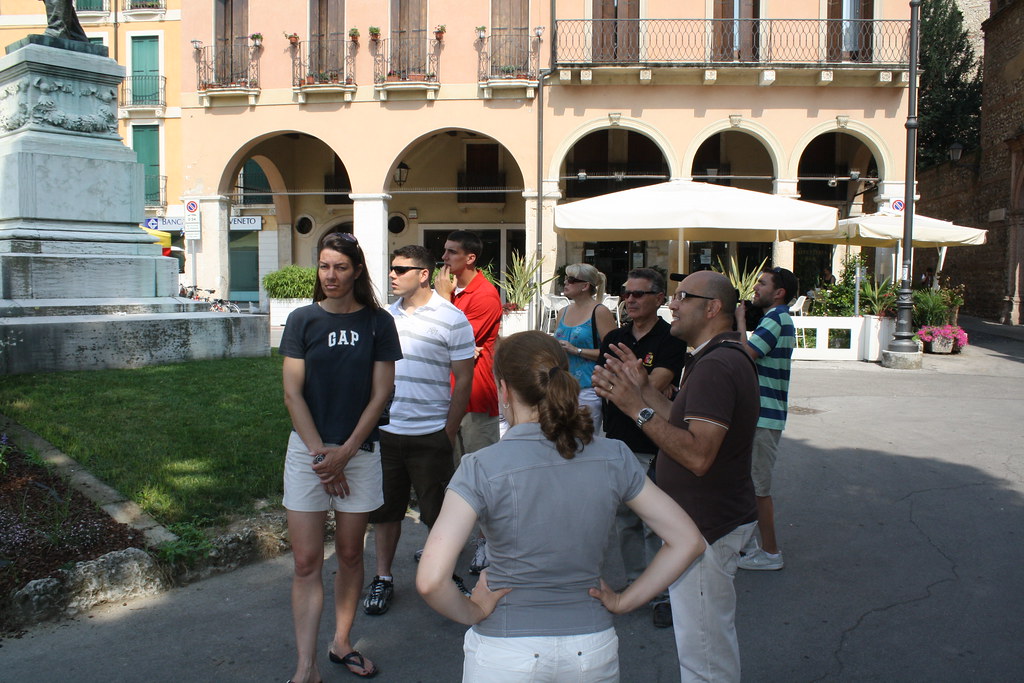
No segment of urban tourism is growing faster than the walking tour. Whether it is a no-charge stroll through a European capital, an upscale food crawl, a ghost walk, a street art ramble, or a deep historical exploration, the format has surged because it offers exactly what today's travellers want: genuine, local, and personal encounters. On a walking tour, the guide is not merely a commentator, the guide is the product.
Research from the Institute of Tourist Guiding shows that how satisfied visitors feel on a guided walk depends almost completely on the calibre of the guide. An average route led by a brilliant guide will beat a flawless route led by an average guide on every occasion. That is why, for a walking tour business, training guides is not a back-office task, it is the central investment that defines the company.
What follows is a structured walking tour guide training programme designed to produce guides who can entertain, inform, keep groups safe across the city, and reliably earn the five-star reviews that fill the booking calendar.
Role Overview
Core Responsibilities
Being a walking tour guide blends city storytelling, crowd handling, and commercial delivery:
- Tour delivery — running absorbing, well-timed walks along set routes
- Storytelling and interpretation — blending history, culture, architecture, and local anecdotes into gripping narratives
- Group management — safely shepherding parties of 10-30+ through hectic city streets
- Pedestrian safety — handling road crossings, packed areas, and uneven ground while keeping the group together
- Customer service — welcoming guests, setting expectations, resolving complaints, and creating memorable outings
- Commercial awareness — encouraging future bookings, partner venues, reviews, and tips (in free tour models)
- Route adaptation — reshaping routes around weather, building works, events, and accessibility requirements
- Local knowledge — fielding off-script queries on dining, transport, sights, and local etiquette
A Typical Day
A guide's day generally opens with a look at the weather, route alerts (works, closures, events), and the booking sheet. Getting ready beforehand means going over content, charging gear, and sorting any props or visual aids. The opening tour normally goes out mid-morning and runs for 2-3 hours. In the gaps between tours, guides eat, rest, and look out for any route updates. Afternoon walks are routine, with evening slots reserved for themed outings (food, pub, ghost). Once a tour wraps, guides record tips, flag any route problems, and pass feedback back to operations.
Key Challenges
| Challenge | Impact |
|---|---|
| Maintaining energy across multiple daily tours | Guides may deliver 2-3 tours daily; energy and enthusiasm must be sustained |
| Weather variability | Rain, extreme heat, and cold affect both guide and guest experience |
| Urban safety management | Traffic, uneven pavements, crowd congestion, and group separation risks |
| Group diversity | Same tour includes history enthusiasts, families with children, and reluctant partners |
| Free tour model pressure | In tip-based models, income depends entirely on guest perceived value |
| Competition and review dependence | Online review scores directly determine booking volumes |
Required Knowledge and Skills
| Skill Area | Proficiency Needed | How to Develop |
|---|---|---|
| Local history and culture | Advanced — must know the city's story deeply, accurately, and engagingly | Institute of Tourist Guiding qualification; academic reading; TravAI e-learning on destination content |
| Storytelling and performance | Advanced — must deliver content as compelling narrative, not lecture | Storytelling workshops; theatre/improv training; TravAI roleplay practice |
| Urban group management | Advanced — must safely navigate groups through busy city environments | Pedestrian safety training; TravAI scenario simulations; mentored walks |
| Customer service | Intermediate to Advanced — must handle diverse guest needs professionally | Service excellence modules via TravAI e-learning; hospitality standards training |
| Route and timing management | Intermediate to Advanced — must deliver consistent tour within target duration | Practice walks; timing exercises; route contingency planning |
| Accessibility awareness | Intermediate — must adapt tours for visitors with mobility, sensory, or other needs | Accessibility training; inclusive guiding workshops; TravAI accessibility modules |
| Commercial and review skills | Intermediate — must understand how to generate reviews, tips, and repeat bookings | TravAI sales coaching; review generation best practices |
| First aid basics | Intermediate — urban first aid for common incidents (falls, heat exhaustion, allergic reactions) | First aid certification; TravAI compliance modules |
Competency Framework
| Competency | Beginner | Intermediate | Advanced |
|---|---|---|---|
| Content delivery | Delivers scripted tour content accurately with reasonable engagement | Adapts content to audience; uses humour, questions, and sensory techniques; feels natural | Creates unforgettable experiences; develops new tour content; every tour feels fresh and personal |
| Storytelling | Tells stories in chronological order with clear facts | Uses narrative arcs, character development, and suspense; connects stories to audience emotions | Master storyteller; audiences are visibly moved or entertained; generates five-star reviews and repeat bookings |
| Group management | Manages small groups on straightforward routes safely | Handles large groups (20+) through complex urban environments; maintains cohesion at road crossings | Flawlessly manages groups of any size in any conditions; adapts to unexpected disruptions seamlessly |
| Audience reading | Notices when group seems disengaged; attempts to adjust | Reads energy in real time; adjusts pace, depth, and humour to match group personality | Transforms any group dynamic into an engaged audience; turns reluctant participants into enthusiasts |
| Commercial awareness | Mentions reviews and future tours at appropriate moments | Naturally integrates commercial elements; generates above-average tips and review rates | Maximises commercial outcomes through genuine value delivery; builds personal following |
| Route adaptation | Follows established route; knows one alternative for disruptions | Adapts to weather, events, and construction independently; maintains quality on alternative routes | Creates new routes; develops themed variations; innovates the walking tour format |
Training Programme Structure
| Week/Phase | Focus Area | Activities | Assessment |
|---|---|---|---|
| Week 1-2: Foundation | City knowledge, company standards, and route learning | TravAI e-learning modules on city history and culture; route walking (solo, multiple times); company brand and service standards; basic first aid | City knowledge assessment with 85%+ pass; route timing exercise |
| Week 3-4: Storytelling & Delivery | Narrative technique and performance skills | Storytelling workshops; improv exercises; delivery coaching; TravAI roleplay practice with simulated audiences; observe experienced guides (minimum 5 tours) | Practice tour delivery (assessed by senior guide); storytelling technique evaluation |
| Week 5-6: Group Management & Safety | Urban group management and accessibility | Pedestrian safety training; large group management practice; accessibility awareness workshop; weather contingency planning; TravAI scenario simulations | Observed group management on a practice walk; safety knowledge assessment |
| Week 7-8: Customer Service & Commercial | Guest experience and commercial skills | Customer service excellence training via TravAI e-learning; review generation techniques; tip optimisation (for free tour models); complaint handling; sales coaching | Customer service roleplay assessment; commercial skills evaluation |
| Week 9-10: Mentored Guiding | Supervised live tours | Co-lead tours with experienced guide; lead tours under observation; collect guest feedback; daily debrief sessions | Guest satisfaction scores; senior guide assessment; timing accuracy |
| Week 11-12: Independence & Sign-Off | Full independent guiding | Lead all standard tours independently; manage adverse conditions; handle incidents; contribute to route refinement | Final competence sign-off; guest satisfaction above 4.5/5; TravAI comprehensive assessment passed |
AI Training Recommendations
Walking tour operators wrestle with a particular set of training pressures: heavy seasonal hiring, guides spread across different locations, income models that hinge on tips, and total reliance on review scores. AI-powered training tools tackle all of these at scale.
How TravAI Tools Address Each Skill Gap
Consistent knowledge training — through its e-learning platform, TravAI rolls out the same city knowledge training to every guide, no matter their start date. Modules spanning history, architecture, culture, and local tales give each guide an identical factual grounding. That matters enormously for firms taking on seasonal staff who must be trained quickly and consistently.
Storytelling practice without audiences — with AI roleplay, guides can rehearse their delivery against simulated crowds before they ever meet a paying guest. The AI plays a range of group types — keen tourists, hushed groups, families with bored teenagers, large parties, and accessibility-focused visitors — and gives feedback on engagement, pacing, and how content lands.
Assessment and quality control — Assessment tools confirm a guide's knowledge before they take charge of their first tour. That safeguards the firm's standing by making sure nobody goes live without proving they are ready. Where a company runs dozens of guides, this consistency is priceless.
Performance tracking — Analytics dashboards link guide training completion to guest satisfaction and review ratings. Managers can spot which guides would benefit from extra coaching and which modules line up with the best results.
Sales and commercial skills — whether the goal is earning tips, plugging upcoming tours, or pointing guests towards partner venues, TravAI's sales coaching features teach natural, value-adding approaches that come across as sincere rather than pushy. That feeds straight into revenue per tour.
Common Skill Gaps
| Skill Gap | Impact on Business | Training Solution |
|---|---|---|
| Storytelling vs. lecturing | Guides deliver facts without narrative; tours feel like textbooks; poor reviews | Storytelling workshops; improv training; TravAI roleplay practice with audience feedback |
| Group energy management | Tours lose momentum; guests disengage mid-tour; declining review scores | Energy management techniques; audience reading practice; TravAI scenario training |
| Urban safety awareness | Incidents at road crossings; group separation in crowds; liability exposure | Pedestrian safety training; TravAI safety modules; incident management practice |
| Timing consistency | Tours run too long (guests frustrated) or too short (feel short-changed) | Timing exercises; practice walks with stopwatch; route timing benchmarks |
| Handling difficult guests | Disruptive guests ruin experience for others; complaints not resolved | Conflict resolution training; TravAI roleplay scenarios; de-escalation techniques |
| Review and tip generation | Below-average review scores and tips despite good content delivery | Sales coaching; review request timing; tip framing techniques (for free tour models) |
| Accessibility awareness | Visitors with mobility issues excluded; accessibility complaints; legal risk | Inclusive guiding training; TravAI accessibility e-learning; route accessibility mapping |
Onboarding Milestones
| Timeframe | Milestone | Measurable Outcome |
|---|---|---|
| Before Day 1 | Complete pre-arrival e-learning | City knowledge assessment passed with 85%+; company standards module completed |
| End of Week 1 | Route knowledge established | Can walk all routes solo with accurate timing (within 5 minutes of target); knows all stop locations and key content |
| End of Week 2 | Storytelling foundations demonstrated | Delivers three tour sections using narrative technique; peer and mentor feedback positive |
| End of Month 1 | Mentored guiding commenced | At least 8 co-led or observed tours completed with documented feedback |
| End of Month 2 | Independent guiding signed off | Final competence assessment passed; first independent tours achieve 4.5/5+ satisfaction |
| End of Month 3 | Full operational confidence | Independently delivers all tour types; handles weather, disruptions, and challenging groups; review average above 4.7/5 |
| End of Month 6 | Development and leadership | Contributing to content development; mentoring newer guides; personal review average above 4.8/5; TravAI competency scores exceeding benchmarks |
Measuring Training Effectiveness
| KPI | Baseline Measurement | Target Improvement | Measurement Method |
|---|---|---|---|
| Guest satisfaction scores | Post-tour rating average | 4.7/5 or above consistently | Post-tour surveys; platform review scores |
| Review generation rate | % of guests leaving reviews | 20%+ of guests leave reviews | Review platform data; booking system cross-reference |
| Training completion rate | % of guides completing all required modules | 100% before first independent tour | TravAI analytics |
| Time to independence | Weeks from start to independent guiding | Reduction by 1-2 weeks through structured programme | Training records; sign-off dates |
| Tour timing consistency | Variance from target tour duration | Within 5 minutes of target consistently | Guide reporting; spot-check observations |
| Guide retention rate | Annual turnover % | 15% reduction in trained guide turnover | HR records; industry benchmarking |
| Revenue per tour | Average tips (free tours) or average booking value (paid tours) | 10-15% improvement after training programme | Financial reporting; guide income data |
| Repeat booking rate | % of guests booking additional tours | 10%+ repeat or cross-sell rate | Booking system analysis |
| Safety incident rate | Incidents per 1,000 tours | Year-on-year reduction; target zero serious incidents | Incident reporting system |
| Guide knowledge accuracy | Assessment scores on city content | 90%+ across all active guides | TravAI assessment platform; periodic reassessment |
Next Steps
For a walking tour operator, the quality of your guides is not just one ingredient among several, it is the whole product. A structured training pathway makes certain your guides keep delivering reliably outstanding experiences, the kind that produce the five-star reviews and personal recommendations your business runs on.
To go further on building experience and attraction teams, dip into guest experience training approaches, find out about AI-powered roleplay for service training, or see how e-learning scales guide onboarding.